Pitting corrosion in stainless steel fittings is one of the more common surprises in pulp and paper mills. A familiar grade name on the drawing says little about how a fitting will behave in a particular process stream, so the useful approach is to separate the mill areas first, compare materials second, and check the documentation before the price.
In short: grade selection for pulp and paper fittings depends on the actual process chemistry, temperature, deposits, and joint geometry. PREN is a useful way to compare resistance to chloride pitting, but it cannot qualify a material for service. Use it alongside documented operating conditions and a review by a qualified corrosion or materials engineer.
The best starting point is not a contest between grades but a service map. A fitting in a bleach filtrate line faces different demands from one in black liquor service, even when both sit on the same purchase order.
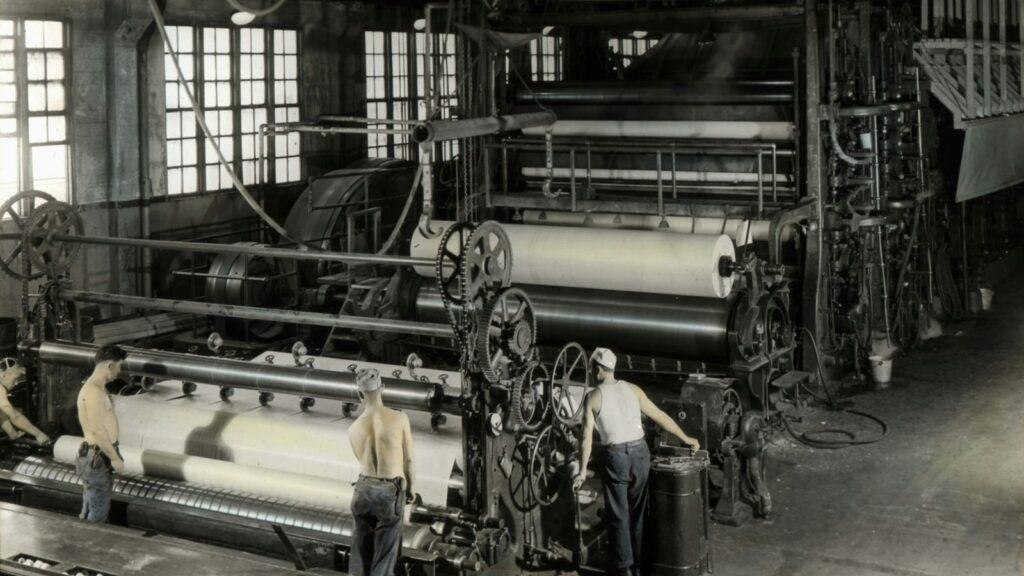
Where corrosion hits in a kraft pulp mill (digester, black liquor, bleach plant)
A single mill-wide material specification can hide important differences between process areas. Treat digester and black liquor service, the bleach plant, and white water as separate cases before comparing grades.
| Mill area | Conditions to review | What it means for purchasing |
|---|---|---|
| Digester and liquor lines | Temperature, alkalinity, sulfur species, solids, operating changes | The review has to go beyond chloride pitting |
| Black liquor systems | Concentration, temperature, deposits, flow, cleaning exposure | Different stages may need different materials |
| Bleach plant and filtrate | Chlorides, chlorine dioxide where used, acidity, oxidizing conditions, temperature | Qualify the material for the actual stream |
| White water | Dissolved salts, fines, deposits, intermittent flow, water-circuit closure | Deposit control and joint geometry matter as much as grade |
Black liquor is not a chloride-only problem. In the kraft process, pitting and crevice corrosion are only part of the picture. A high PREN value does not rule out general corrosion, cracking, or erosion-corrosion in a given liquor service, and a digester line and a concentrated black liquor line can have quite different operating envelopes. Name the specific stream rather than a broad label such as "kraft service".
Bleach plant streams each need their own identity. A bleach plant contains several chemical environments. Distinguish the stage, the filtrate composition, the normal temperature, and credible upsets. Chlorides plus oxidizing chemicals make localized corrosion especially relevant, but no single rule covers every bleach line.
White water stays on the list. It can look mild next to bleaching service, yet deposits and stagnant spots create unfavorable local conditions, and closing up the water circuit tends to concentrate dissolved salts over time.
The useful procurement document is a service-specific materials basis, not one grade applied across the whole mill.
Pitting vs crevice corrosion: how chlorides attack stainless steel
Pitting starts at local sites where the passive film on stainless steel breaks down, usually on an exposed surface. Crevice corrosion develops inside a shielded space, such as a gasket interface, under a deposit, or in a poorly configured joint, where the trapped liquid can become more acidic and richer in chlorides than the bulk stream. That is why a bulk water analysis does not fully describe the environment under a deposit or gasket.
| Question | Pitting | Crevice corrosion |
|---|---|---|
| Surface condition | Contamination and defects affect initiation | Also matters inside restricted spaces |
| Deposits likely? | Create unfavorable local exposure | Create crevice-like conditions |
| Joint configuration | Affects drainage and cleanliness | Gasket faces and gaps become critical |
| Shutdowns | Residual liquid may concentrate | Liquid stays trapped in poorly flushed spaces |
No universal chloride limit
A claim such as "this grade handles X ppm chloride" is incomplete without temperature, pH, oxidizing conditions, and geometry, and laboratory results depend on test method and specimen condition. Treat published chloride guidance as background, not as a substitute for an application-specific assessment. The same grade can behave quite differently in a clean, flowing stream and under persistent deposits.
Link the corrosion review to quality control
On the purchasing side, ask for evidence of surface finishing, contamination control, and fabrication practice, and state the requirements for weld heat tint and final surface condition. These checks are not a corrosion guarantee; they reduce the risk that a sound material choice is undone by an avoidable manufacturing or installation issue.
PREN explained: comparing 316L, 317L, 2205, 904L, 254 SMO
PREN (pitting resistance equivalent number) estimates relative resistance to chloride pitting from chromium, molybdenum, and nitrogen content. The common form is:
PREN = %Cr + 3.3 × %Mo + 16 × %N
It is a screening indicator, not a service rating. It does not predict corrosion life, allowable temperature, or resistance to every process chemical.
Illustrative PREN values (not specification minima)
The table uses rounded, illustrative compositions only to show how the formula works. These figures are not specification minima, certified heat analyses, or buying recommendations. Real PREN depends on the actual heat chemistry.
| Grade | UNS | Illustrative Cr / Mo / N (wt.%) | PREN (rounded) |
|---|---|---|---|
| 316L | S31603 | 17.0 / 2.1 / 0.05 | 25 |
| 317L | S31703 | 18.0 / 3.1 / 0.05 | 29 |
| 2205 | S32205 / S31803 | 22.0 / 3.1 / 0.17 | 35 |
| 904L | N08904 | 20.0 / 4.3 / 0.04 | 35 |
| 254 SMO | S31254 | 20.0 / 6.1 / 0.20 | 43 |
Commercial "2205" can mean S31803 or S32205, so specify the UNS number rather than assume the two are interchangeable. Some conventions add tungsten or use a different nitrogen factor; keep one formula when comparing values.
What PREN leaves out
PREN ignores elements such as nickel and copper, which can matter in some chemistries. It also says nothing about the condition of a weld or heat-affected zone, detrimental phases, the finished surface, the severity of a gasket crevice, or the effects of stress, deposits, and process upsets. A ranking based on bulk composition does not reproduce the behavior of a finished flange assembly, and crevice resistance is a separate question from pitting resistance.
316L vs 2205, briefly
The table puts 2205 above 316L for chloride pitting resistance, but that alone does not make duplex suitable for a given bleach filtrate or liquor line. Treat the gap as a reason for engineering review, not an automatic substitution. For the fuller grade comparison, see 316L vs duplex 2205 fittings.
Bleach plant lines: why duplex is often specified
Duplex grades are often considered for bleach plant service because they combine useful chloride resistance with higher strength than common austenitic grades. Suitability still depends on the exact stream and fabrication condition; 2205 should not be assumed adequate for every chlorine dioxide or acidic chloride service, and for the most demanding streams the engineering team may evaluate higher-alloy austenitic grades such as 254 SMO, or other materials.
Strength is not a licence to thin the wall. Higher strength can be a design advantage, but a buyer cannot reduce fitting wall thickness on that basis alone. The piping code, component design, corrosion allowance, and project specification set the approved dimensions.
Duplex performance depends on processing. It relies on more than the chemistry printed on a certificate. Look for evidence that the manufacturing route and solution heat treatment suit the specified product. If phase-balance or detrimental-phase testing is needed, specify it before manufacture, with acceptance criteria set by a qualified materials engineer; not every duplex order needs every possible test.
Define the stream before comparing quotes. A line described only as "bleach plant service" is not defined well enough. Clarify the stage, temperature range, cleaning exposure, and upset conditions first, so a purchasing choice does not become an unreviewed engineering change. Grade options and sizes are covered in duplex 2205 / 2507 fittings and flanges.
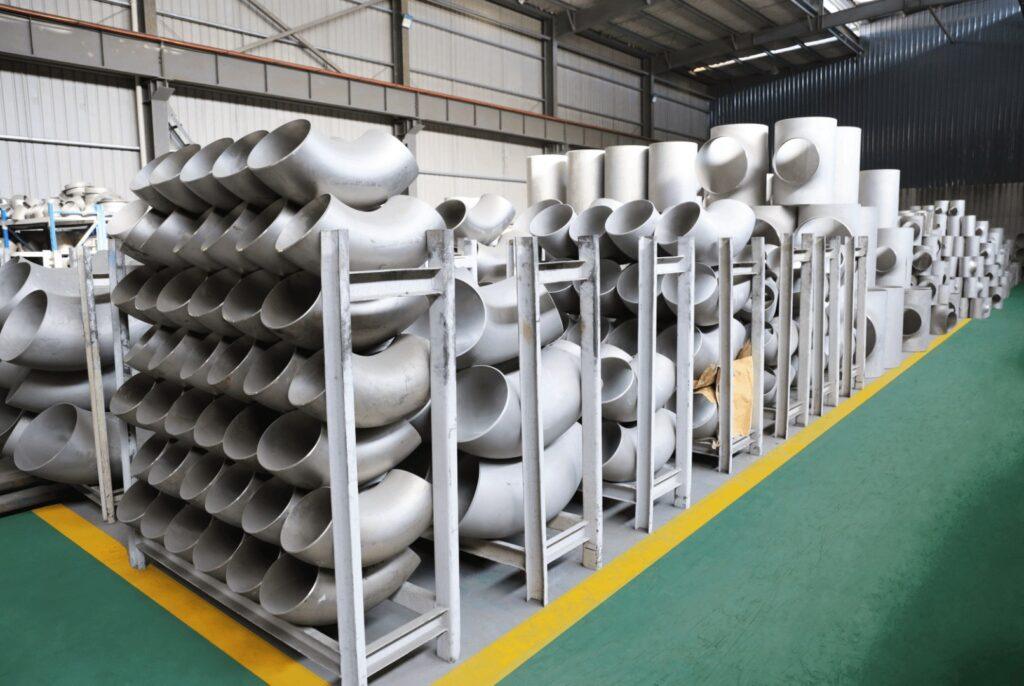
Fitting and flange details that reduce crevice risk
A suitable alloy can still perform poorly when the assembly traps liquid or holds deposits, and these weaknesses are easy to miss when only grade and price are compared.
Butt-weld fittings as finished components. Butt-weld joints avoid some gasketed interfaces, but they do not make an assembly immune to localized corrosion. Check the supplied fitting against the approved drawing and dimensional standard: end preparation, wall thickness against the ordered value and tolerances, internal transitions, final surface cleanliness, and markings that support traceability without damaging critical surfaces. Weld quality, alignment, and deposits still matter.
Flange sealing as an engineered interface. Every flange joint contains restricted contact areas. Review gasket compatibility, facing finish, alignment, and the assembly procedure together, and let a qualified piping or sealing specialist set the arrangement. Tighter bolting is not a universal fix; the approved procedure and gasket limits govern the joint. Flange types are listed under stainless flanges.
Cleanliness without promises of immunity. Embedded iron and poor handling can undermine a sound purchase. Ask how stainless items are kept apart from carbon steel and how the final surface is controlled. Where cleaning, pickling, or passivation is required, document it clearly; none of these turns an unsuitable alloy into a suitable one. Drainage, dead legs, supports, field welding, and maintenance access are site responsibilities that decide whether the installed system keeps the benefit of the purchased parts.
What to put on the RFQ (grade, PMI, EN10204 3.1)
An RFQ that asks only for "stainless elbows and flanges" leaves too much open, and suppliers will quote different grades, routes, and document packages.
| RFQ item | Make explicit |
|---|---|
| Service basis | Mill area, operating envelope, cleaning and upset exposure |
| Material | Grade, UNS number, product specification, condition |
| Product form | Butt-weld fitting, flange, or other approved item |
| Dimensions | Applicable standard, end connections, drawings |
| Wall thickness | Ordered thickness or schedule, tolerances |
| Traceability | Heat or lot identification on finished items |
| Inspection | Dimensional checks, examinations, acceptance criteria |
| PMI | Method, coverage, reporting |
| Documents | EN 10204 type, extra reports, submission timing |
ASME B16.9 and ASME B16.5 are dimensional standards for fittings and flanges; they do not replace the material specification or service qualification, so the quotation should state which standard applies to which item.
PMI and its limits. Positive material identification helps catch alloy mix-ups, but the technique decides what it can show. Handheld XRF generally cannot measure carbon or nitrogen, so it is not proof of an "L" carbon limit or of a nitrogen-dependent PREN. State what the PMI must demonstrate, and rely on certified chemical analysis for the rest.
EN 10204 3.1 vs 3.2. A 3.1 certificate carries specific inspection results and is validated by the manufacturer's authorized inspection representative, independent of production. A 3.2 certificate is additionally validated by the purchaser's representative or an officially designated inspector, so agree on it before production. Neither type, on its own, shows a grade is suitable for the mill's actual environment. The general checklist is in our buying guide for butt-weld fittings and forged flanges.
FAQ
Does a higher PREN mean better performance in every mill area?
No. PREN compares one aspect of chloride pitting resistance. It does not cover every liquor chemistry, cracking mechanism, or fabrication defect, so digester, black liquor, and bleach plant service each need a broader assessment.
Can 2205 replace 316L without changing the specification?
Not automatically. The exact service, material specification, mechanical design, fabrication, and inspection scope all need review, and a material change still needs formal approval.
Is EN 10204 3.1 the same as PMI?
No. A 3.1 certificate documents specified inspection results; PMI checks material identity with an agreed method and scope. Link both to component traceability rather than letting one stand in for the other.
Do butt-weld fittings eliminate crevice corrosion?
No. They avoid some gasketed interfaces, but deposits, imperfect joint details, and other restricted spots can remain.
Should every order include corrosion testing?
Not necessarily. A qualified materials engineer should set testing by service severity and project requirements, naming the test standard, specimen condition, sampling, and acceptance criteria.
Sourcing stainless fittings and flanges for pulp and paper lines
HuaboPipe manufactures stainless and duplex butt-weld fittings (cold formed) and forged flanges. Fittings are made to ASME B16.9 (DN15 to DN1200); flanges to ASME B16.5 up to NPS 24 (DN600) and to ASME B16.47 or drawing above that. Larger sizes are made to drawing, up to DN3000. Wall thickness follows the order. Pipe and valves can be supplied to match the project. PMI is available on request; EN 10204 3.1 certificates are available, and 3.2 is available on request.
Send us the engineer-approved specification and item list for a documented quotation. Browse our pipe fittings and flanges, or contact us at +86 15210578298 (Tel/WhatsApp) or lucas@hbpipe.com. We typically reply within one business day.