
Flow-accelerated corrosion (FAC) is one of the best-known causes of wall thinning in the steam and water piping of a nuclear power plant. Replacing a thinned carbon-steel elbow with stainless steel can remove the material susceptibility, but it does not fix the flow pattern, the water chemistry, or the condition of the pipe next to it. This guide explains where FAC shows up on the turbine side of the plant and how stainless fittings fit into an engineering-approved replacement.
FAC dissolves the protective oxide on carbon and low-alloy steel exposed to flowing water or wet steam, so the wall keeps getting thinner. Austenitic stainless steels such as 304L, 316L and 316LN are virtually immune to it. They are one option within a plant's FAC programme, used where engineering approves the change, with the service conditions, adjoining materials and inspection records all reviewed.
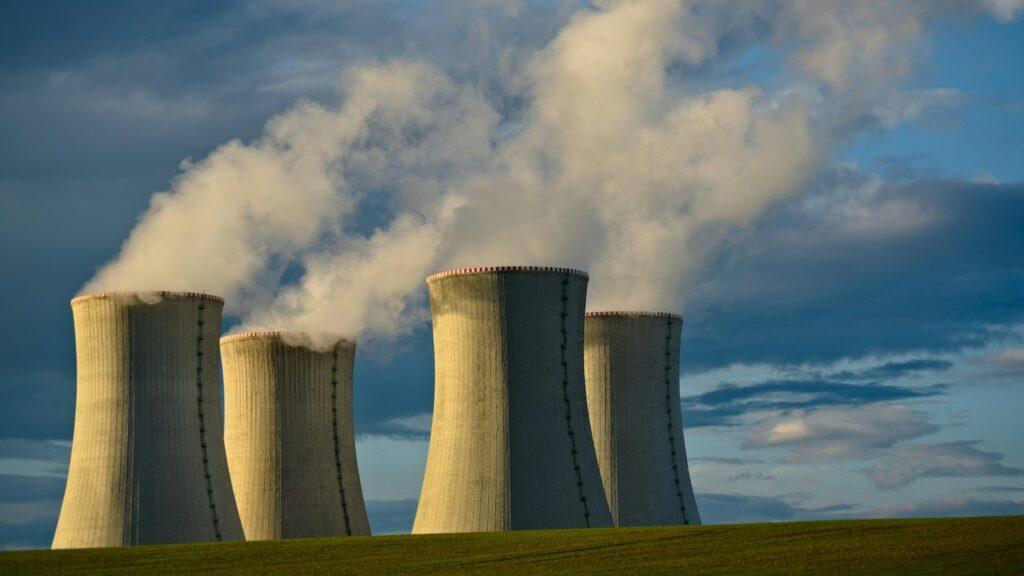
Scope: this article covers only the conventional island, the turbine-side steam and water cycle. It does not cover nuclear-island safety-class equipment, nuclear-grade certification, or qualification for those applications.
Nuclear island vs conventional island: where the line is drawn
In a typical pressurized-water reactor (NRC), pressurized water in the primary loop carries heat from the core to the steam generator. Inside the steam generator, that heat boils water in a separate secondary loop. The steam drives the turbine, is condensed in the condenser, and is pumped and reheated back to the steam generator.
The nuclear island holds the reactor, the primary loop and the safety systems. The conventional island holds the turbine generator and most of the secondary steam and water cycle. It works much like the steam side of a fossil power station.
The physical boundary does not settle the procurement scope, though. Part of the secondary circuit, for example the main steam and feedwater lines close to containment, can carry a higher equipment classification than the turbine hall. A boiling-water reactor has no separate secondary loop at all, so the same description does not fit every plant.
For that reason, a request for quotation should identify each line by system and line number and state the owner's equipment classification, instead of describing parts as simply "for a nuclear power station". The quotation should then follow that classification, list any deviations, and keep component supply separate from installation, welding and engineering approval. A material certificate identifies a heat of stainless steel. It does not say whether a fitting belongs in a particular plant system.
Main conventional-island systems: steam, feedwater, condensate, MSR
A single purchase package for the conventional island can cover very different services. "Steam line" alone does not say whether a fitting sees dry steam, wet steam, hot water or intermittent drainage, and for FAC that difference matters.
| System | What it does | Typical FAC concern |
|---|---|---|
| Main and extraction steam | Carries steam to the turbine and to the feedwater heaters | Wet steam in extraction lines and downstream of the high-pressure turbine |
| Moisture separator reheater (MSR) | Removes moisture and reheats steam between the high- and low-pressure turbines | Wet-steam connections, heater drains and drain tanks |
| Condensate | Pumps condensed water from the condenser through the low-pressure heaters | Single-phase water in the higher temperature range |
| Feedwater | Pumps and heats water back to the steam generator | Hot single-phase water at high velocity, near pumps, valves and flow elements |
The moisture separator reheater sits between the high- and low-pressure turbines, and ASME has a dedicated performance test code (PTC 12.4) for it. Its drains and associated piping deserve separate attention in a line list.
Small lines matter too. Drains, vents, bypasses and recirculation lines are often left out of the main equipment description. Checking the main line list against those schedules helps keep every susceptible location in the evaluation. Many of the same code and material questions arise in fossil plants; see power plant boiler fittings and flanges.
What flow-accelerated corrosion is and where it shows up
FAC is not mechanical erosion. Carbon steel in water normally carries a thin magnetite (iron oxide) layer. In flowing water or wet steam, that layer dissolves into the fluid faster than it can protect the metal, so the steel underneath keeps oxidising and thinning. The International Atomic Energy Agency reports metal loss that can reach about 3 mm per year, with carbon-steel components in wet steam being especially susceptible (IAEA NR-T-2.16, section 2.8.3).
Four operating factors interact:
| Factor | Effect on FAC (carbon and low-alloy steel) |
|---|---|
| Temperature | Most single-phase cases occur at about 80–230°C, and two-phase cases at about 140–260°C. Wear is often highest around 150°C. |
| Flow velocity and turbulence | Higher local mass transfer means faster wear. Fittings and spots just downstream of disturbances see the most. |
| pH | Higher pH generally reduces wear. In two-phase flow, the pH of the liquid film is what counts. |
| Dissolved oxygen | Very low oxygen is harmful to carbon steel. Wear drops sharply with more than about 20 ppb oxygen, depending on other conditions. |
The temperature, pH and oxygen figures above come from the same IAEA report. They describe reported plant experience, not a safe operating envelope.
Plants manage FAC with several countermeasures: approved water-chemistry optimisation, hydraulic changes, inspection and wall-thickness trending, and replacement with resistant material. A stainless fitting addresses only the material part. Chemistry and hydraulic decisions belong to the plant's chemistry and engineering staff, not to a fitting supplier.
FAC also needs to be told apart from other thinning mechanisms. Liquid droplet impingement in wet steam, typically on the outer side (extrados) of an elbow, and cavitation downstream of valves and orifices can look similar. The plant's assessment should name the governing mechanism before a material change is approved.
Material choices that reduce FAC risk (incl. stainless 304L/316L/316LN)
The IAEA report notes that even small amounts of chromium, copper and molybdenum reduce FAC considerably: about 0.2% chromium can cut the rate by around 80%, and 2¼Cr-1Mo steel reduces it by a factor of about four. Austenitic stainless steels are virtually immune to flow-accelerated corrosion. Many replacement programmes therefore choose between chromium-molybdenum steel and stainless steel, depending on cost, welding and the approved specification.
Among stainless grades, the choice is usually driven by requirements other than FAC:
| Grade | What distinguishes it | Question for the engineer |
|---|---|---|
| 304L | Low-carbon 18Cr-8Ni austenitic stainless | Is it accepted for the full service environment, including chlorides and external exposure? |
| 316L | Adds about 2% molybdenum for better pitting and crevice resistance | Does the line need that extra alloying for reasons beyond FAC? |
| 316LN | 316L with controlled nitrogen for higher strength while keeping low carbon | Does the specified product form provide the required chemistry and mechanical properties? |
A grade name is not a complete order line. "316L elbow" leaves out the product specification, the fitting class, the heat-treatment condition, testing and dimensions. Wrought stainless butt-weld fittings are normally ordered to ASTM A403, which covers grades such as WP304L, WP316L and WP316LN, and to ASME B16.9 dimensions. Any alternative material or product standard proposed by a supplier should be listed as a deviation.
Two engineering points come with a material change:
- The entrance effect. When flow passes from a resistant material into susceptible carbon steel, the carbon steel just downstream can wear faster, often as a groove near the weld. The replacement boundary and the inspection of adjoining pipe should allow for this.
- Wall thickness and bore. A material upgrade is not a reason to reduce thickness or change the bore informally. The dissimilar weld to existing carbon steel, the end preparation and any change in wall thickness should all be set by the project's engineering.
Fittings at high-risk spots: elbows, reducers, tees
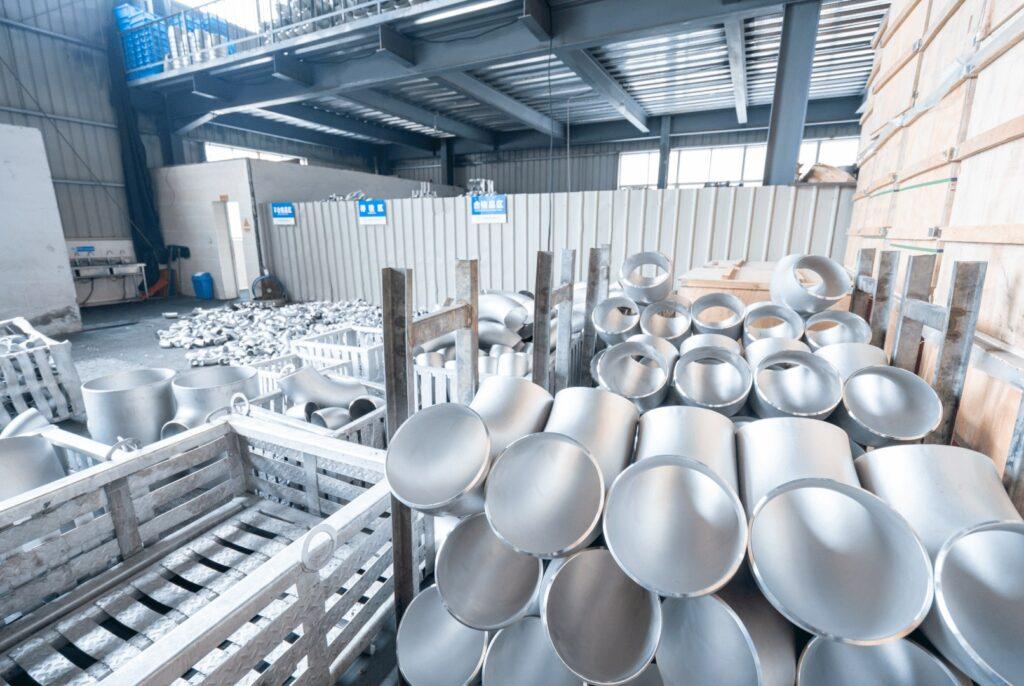
Fittings change the direction or the cross-section of the flow, so they are where mass transfer peaks. Plant experience points to the same places again and again: elbows, especially closely spaced ones; reducers and expanders; tees, particularly the branch; and pipe just downstream of control valves, orifices and flow nozzles. Not every elbow thins first. The worst location is found through the plant's predictive models and inspection history, and maximum wear inside a single component can be hard to predict.
When a stainless replacement is quoted, the order should say what the fitting is and how it sits in the line:
- Elbows: radius (long or short), orientation, and any nearby changes in direction.
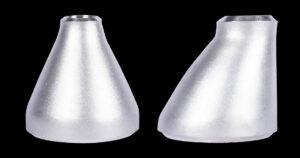
- Reducers: concentric or eccentric, flow direction, and the exact bore transition. See concentric vs eccentric reducers.
- Tees: which side is the run and which is the branch, and the flow split.
- Adjacent pipe: which upstream and downstream sections are being replaced or inspected along with the fitting.
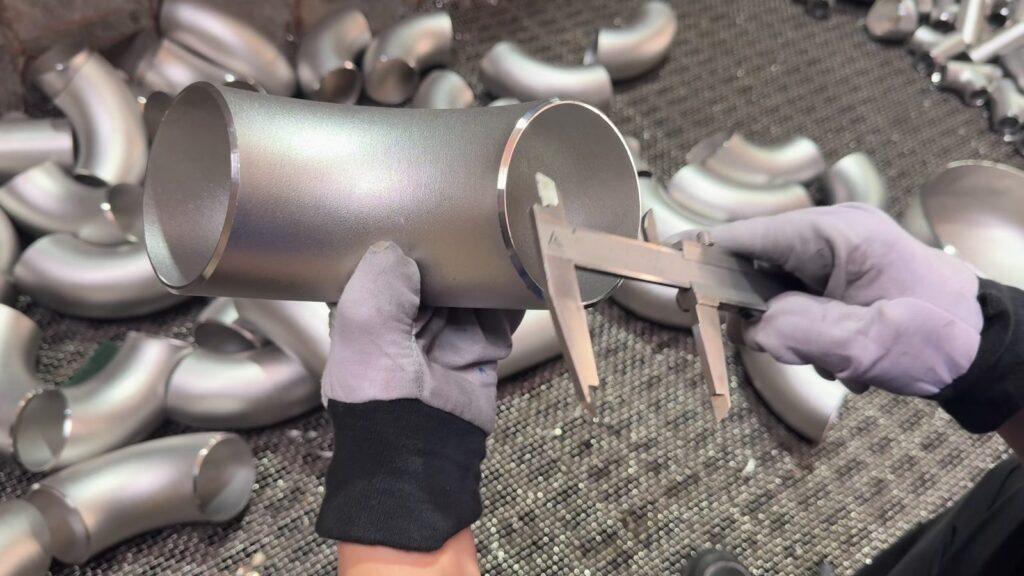
The order should also define dimensional acceptance: how the supplier records end dimensions, geometry and wall thickness, where thickness is measured, and how nonconformances are handled. These details matter most when a replacement has to match existing pipework without unapproved field modification.
Documents to request: material certificates, EN10204 3.1 (3.2 on request)
Inspection documents should be agreed before production, not checked after shipment. Under EN 10204, a type 3.1 inspection certificate reports specific test results and is validated by the manufacturer's authorised inspection representative, who is independent of the manufacturing department. A type 3.2 certificate is additionally validated by the purchaser's authorised representative or an inspector named in official regulations. Neither type is a nuclear qualification for a specific application.
A practical document package for conventional-island replacement fittings usually includes:
| Document | What the buyer checks |
|---|---|
| Material inspection certificate (EN 10204 3.1) | Product specification, grade, heat number, chemical and mechanical results, validation |
| Traceability record | The link between each marked fitting and its heat and certificate |
| Heat-treatment record | Solution-annealing condition and batch |
| Dimensional report | Ordered geometry, end preparation and wall-thickness acceptance |
| Examination reports | Ordered methods, extent and acceptance criteria |
| Deviation register | A documented disposition for every departure from the order |
If 3.2 is required, settle it during the quotation: who validates, which inspections are witnessed, where the hold points are and how release is recorded. Reviewing a sample certificate before a large order can reveal missing fields while changes are still easy. Our company and quality certificates are listed on our certificates page.
FAQ
Does this apply to nuclear-island safety-class equipment?
No. This article covers only conventional-island, turbine-side piping. Classification and acceptance requirements for any line come from the plant owner.
Does stainless steel stop all wall thinning?
It removes FAC susceptibility, because austenitic stainless steel is virtually immune to classic FAC. Droplet impingement, cavitation and other mechanisms still need their own assessment, and adjoining carbon steel can still thin.
Is 316LN always better than 316L for FAC replacements?
Not for FAC itself, since both grades are virtually immune. 316LN is chosen for its strength or because a specification calls for it. The grade should follow the approved specification and service conditions.
Should every fitting order require EN 10204 3.2?
No. Let the approved purchase specification decide. 3.2 adds an external validation step. It is useful when the project requires it, but it does not replace a complete inspection plan.
Sourcing stainless fittings for conventional-island piping
Replacing FAC-damaged components is a linked review of scope, service, material, geometry and evidence. The plant's engineers decide where stainless goes. The supplier's job is to deliver exactly what was specified and prove it with traceable records.
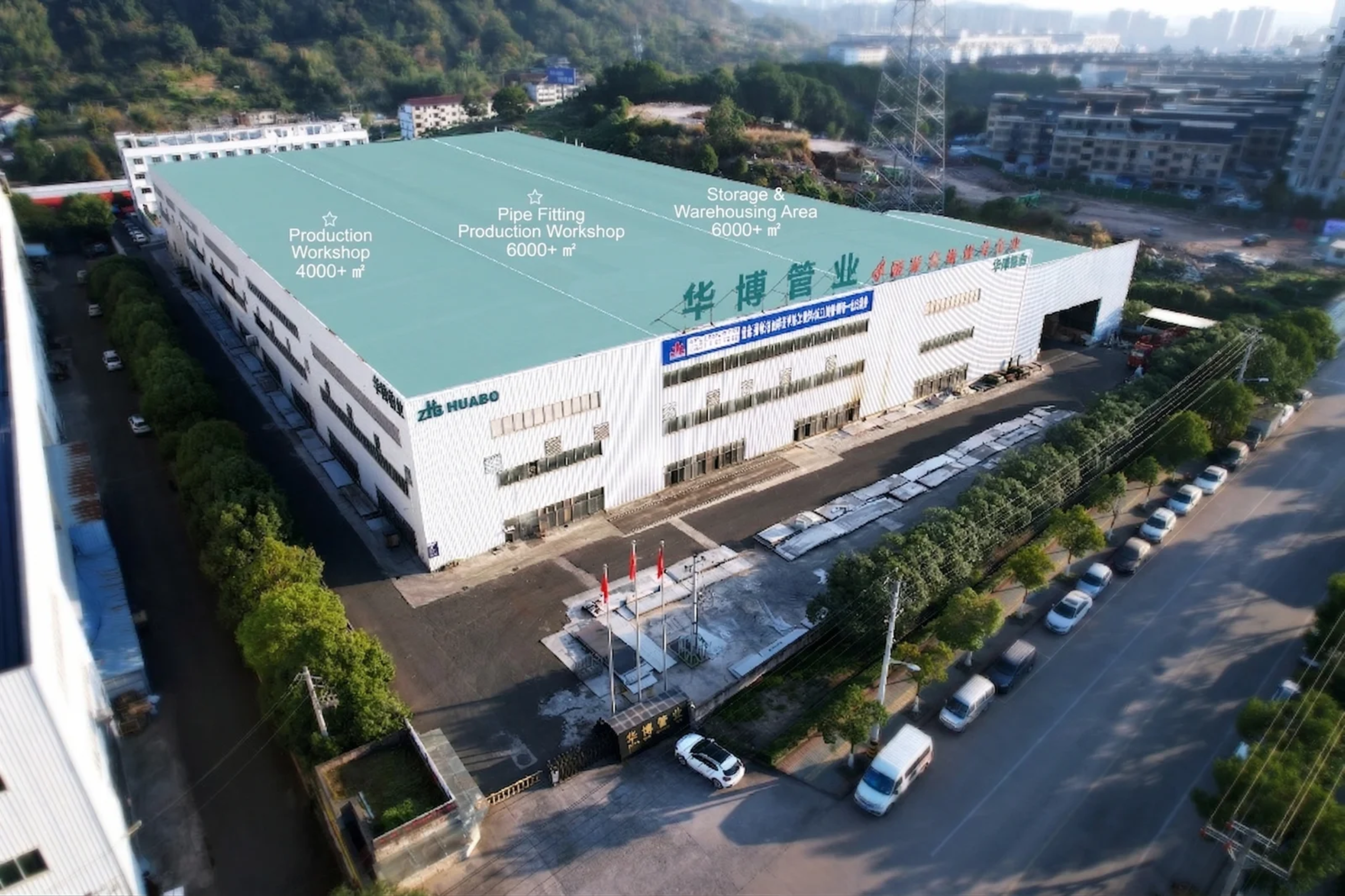
HuaboPipe manufactures stainless butt-weld fittings (cold formed) and forged flanges, and can supply 304L, 316L and 316LN for conventional-island FAC-resistant lines. Fittings are made to ASME B16.9 (DN15 to DN1200); flanges to ASME B16.5 up to NPS 24 (DN600) and to ASME B16.47 or drawing above that. Larger sizes are made to drawing, up to DN3000. Wall thickness follows the order. Stainless pipe and valves can be supplied to match the project. EN 10204 3.1 certificates are available, and 3.2 is available on request.
Send us the approved drawings, line list, material specification, wall requirements and inspection-document schedule, and our quotation will address them item by item. Browse our pipe fittings, or contact us at +86 15210578298 (Tel/WhatsApp) or lucas@hbpipe.com. We typically reply within one business day.

1 Comment