
B31.1 vs B31.3 gets confusing when one plant has boiler steam lines, utility headers, and process piping side by side. If the wrong design basis goes into a purchase order, the material and inspection requirements may have to be revised later. The way to avoid that is to separate three things: code scope, engineering requirements, and component specifications.
In short: ASME B31.1 covers power piping, while ASME B31.3 covers process piping, which can also carry steam. For fittings and flanges, the governing code affects the design, material, fabrication, examination, and testing requirements. Neither code replaces the component specifications, and matching dimensions alone do not show that a component suits a particular piping system.
So start with the line designation, not the stainless grade. This guide moves from code boundaries to material selection and then to the RFQ.
Where B31.1 (power piping) and B31.3 (process piping) apply
A plant name does not say enough about every line inside it. A request for "power plant stainless fittings" still needs the governing code and the system boundary.
ASME B31.1 covers piping typically found in power generation, industrial plants, and heating systems, including defined boiler external piping. ASME B31.3 covers process piping in many industries and lists steam among its fluids. Which code applies is decided by the system scope, the project requirements, and the jurisdiction, not by the fluid name alone. B31.3 is a design code rather than a size standard; for how it relates to pipe dimensions, see ASME B31.3 vs B36.19.
Comparing the two codes
The table is a procurement-level summary. It does not replace the code editions adopted by the project or an engineering review.
| Point | B31.1: Power piping | B31.3: Process piping |
|---|---|---|
| Typical application | Power generation, industrial utility and heating systems | Chemical, refining, pharmaceutical and other process plants |
| Steam service | Within scope | Also within scope |
| Boiler interface | Includes defined boiler external piping, linked to the boiler construction rules | Does not override boiler-specific requirements |
| Design basis | Its own design rules, allowable stresses and factors | Its own design rules, allowable stresses and factors |
| Examination | Depends on the piping and weld conditions | Depends on fluid service, conditions and engineering design |
Drawing the purchasing boundary
Ask for a marked-up P&ID together with the line list, showing where each code begins and ends and who approved that boundary. In a project with a boiler steam supply and several process users, do not assume every downstream connection switches to B31.3 at the same equipment flange; have the responsible engineer confirm the transition and record it in the purchasing documents.
List boiler external piping separately in the quotation schedule, and for each line record the governing code and edition, the approved material specification, and the technical approver. That keeps a commercial description such as "steam pipe fittings" from turning into an unintended design instruction.
Key differences: design temperature, allowable stress, examination
The real B31.1 vs B31.3 differences sit in the detailed design rules, the allowable-stress criteria, and the examination requirements, not in a simple high-temperature versus low-temperature split. Use the material entries, factors, and acceptance rules of the code that applies, and keep component manufacturing examinations separate from examinations of shop and field welds.
Design temperature
Engineering should give the approved design pressure and design temperature together. A normal operating temperature should not quietly become the purchasing design temperature. Suppliers should not be left to add their own temperature margin to fill a gap in the design information.
Allowable stress
The two codes do not use identical allowable-stress criteria in every case. The margin applied to tensile strength is one known difference, and at higher temperatures yield or creep criteria can govern instead. So avoid the claim that one code always gives a thinner wall or is always more conservative. The design reviewer should confirm the exact material specification, grade, product form, temperature, and table notes; purchasing then checks that the offered material matches that approved description.
Examination
"NDT included" is not a scope. B31.1 and B31.3 each have their own examination provisions, and no single percentage covers every piping condition. A useful examination schedule names the component or weld, the method, the extent or sampling basis, the acceptance criteria, personnel qualification and reporting, and any purchaser review or witness points. Pressure or leak testing deserves its own quotation line, so that an examination report is not mistaken for the complete testing package.
Boiler and steam lines: where stainless fittings are used
Stainless fittings are considered where the approved material selection calls for their corrosion resistance, cleanliness, or elevated-temperature properties. Stainless steel is not the automatic choice for every steam line; the environment and the component's duty decide, and the grade is confirmed through materials and piping engineering review.
Organizing the enquiry by service
Rather than one general "boiler stainless" list, split the enquiry into service groups, for example steam connections, condensate systems, water-treatment piping, and process-side utility connections. These are ways of organizing the list, not recommendations for stainless steel. For each group, engineering confirms whether the material choice is driven mainly by temperature, corrosion, product quality, or something else. Conventional-island steam systems in nuclear plants raise many of the same questions; see nuclear conventional island fittings and flanges.
High-temperature duty and mixed materials
Stainless steel for high temperature is selected for elevated-temperature strength, which is a different property from resistance to aqueous corrosion, as manufacturer data makes clear. The technical review should cover the expected time at temperature, the start-up and shutdown pattern, internal and external exposure, and the material and joint arrangements at equipment interfaces.
Alloy steels such as P91 are common in high-temperature boiler lines but sit outside this stainless-focused review. Where the approved design includes a stainless-to-alloy-steel joint, the joint detail and fabrication requirements belong to the welding and materials specialists. A stainless substitute should never be requested just because it is available sooner; any proposed deviation needs technical approval first.
High-temperature stainless grades: 304H, 321, 347H
Grade names can look like a simple temperature ranking. Compare the documented material condition instead.
304H stainless steel is a higher-carbon version of 304 used for better elevated-temperature strength. 321 stainless steel is stabilized with titanium, and 347H is a higher-carbon grade stabilized with niobium. 321 and 321H are not the same grade, and none of these grades is interchangeable. Selection depends on the product specification, the code listing, the heat treatment, and the service evaluation.
| Grade | Main point | What to ask for |
|---|---|---|
| 304H | Higher carbon for better high-temperature strength than the low-carbon grades | Exact grade, chemistry, heat-treatment condition and grain-size evidence |
| 321 | Titanium-stabilized; not automatically equivalent to 321H | Confirmation that the ordered grade meets the approved temperature and stress basis |
| 347H | Niobium stabilization and the H-grade condition both matter | Chemistry, heat-treatment records and the H-grade requirements of the product specification |
Product form matters
The alloy name and the product specification are two different things. Wrought austenitic butt-weld fittings are typically bought to ASTM A403 (for example WP304H, WP321, WP347H), and forged flanges to ASTM A182 (F304H, F321, F347H). "304H stainless" is not a complete description for both an elbow and a flange. H grades carry grain-size and heat-treatment requirements; check them in the specified editions of both specifications instead of assuming the same rules apply to every product form.
Before approving a grade
Compare the offered grade with the approved line specification, review the inspection certificate, and confirm the final heat-treatment condition. A proposed grade substitution is an engineering decision; a supplier's stock position can help with delivery planning but should not settle the material question. Nor should a grade be chosen from a published maximum-temperature figure alone; pressure service depends on the code's allowable stresses.
Fittings and flanges: dimensions to ASME B16.9 / B16.5 and wall thickness
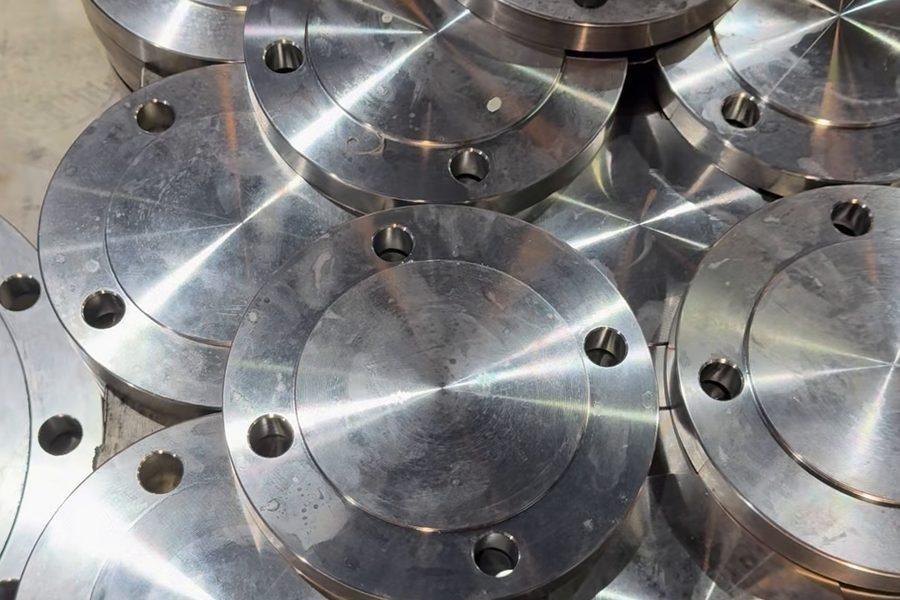
Choosing B31.1 or B31.3 does not change the standard connection dimensions of a fitting or flange. It can change the engineering requirements used to select and accept that component. Specify dimensions to ASME B16.9 / B16.5 together with the approved material, fitting wall thickness, flange class, and inspection requirements.
Butt-weld fitting wall thickness
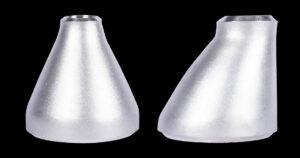
State whether the order calls for a schedule, a nominal wall, or a minimum finished wall, plus the tolerance and any project-specific measurement points. ASME B16.9 covers more than overall dimensions, so a statement limited to dimensions should not be read as proof of full component or system conformity. For formed fittings, ask where thickness will be checked, such as the weld ends and the body, and confirm the matching pipe wall and end preparation before the parts reach fabrication. Common types are listed under butt-weld pipe fittings.
Flange class and rating
B16.5 covers pressure–temperature ratings as well as dimensions, materials, and tolerances. A flange class is therefore not a fixed pressure that applies at every temperature; engineering confirms the material group and the rating at the design temperature. The enquiry should state the flange type, class, facing, bore, material specification, and mating connection, plus gasket and bolting if they are in the supply scope. Weld neck flanges are a common choice for high-temperature, high-pressure lines.
Forming route and heat treatment
Cold forming describes a manufacturing route, not the final material condition. ASTM A403 includes heat-treatment requirements for stainless fittings, so ask for the final heat-treatment record, traceable to the same item or production lot as the dimensional and thickness checks.
What to send for a boiler-piping quote
A fitting description and a quantity leave too much room for different assumptions. Send a compact technical package and ask every supplier to list exclusions before comparing prices.
| Enquiry item | What to provide |
|---|---|
| Code basis | B31.1 or B31.3, the adopted edition, and the line boundary |
| Service conditions | Approved design pressure, design temperature and service description |
| Materials | Product specification, exact grade and any supplementary requirements |
| Fittings | Type, angle or configuration, dimensions and wall thickness |
| Flanges | Type, class, facing, bore and mating connection |
| Quality | Examinations, acceptance criteria, reports, hold and witness points |
| Documents | Inspection certificate type and traceability records |
| Commercial | Quantities, delivery priorities, packing and destination |
Inspection documents
Name the EN 10204 document type before the order is placed. Type 3.2 is validated by both the manufacturer's authorized inspection representative and the purchaser's authorized representative or an inspector designated by official regulations, so agree on the parties and inspection scope early rather than treating it as a paperwork change at dispatch. Ask whether each certificate covers the finished component or only the starting material. The general checklist is in our buying guide for butt-weld fittings and forged flanges.
Comparing the replies
Have every supplier answer the same enquiry revision with a compliance-and-deviation list, separating included tests from optional ones and confirmed material from proposed substitutions. A lower quote that drops an examination or a required document is not a like-for-like price.
FAQ
Can B31.3 apply to steam piping inside a power plant?
Yes. B31.3 lists steam among its fluids and can apply to designated process piping within a power plant. Confirm the approved code boundary rather than assigning B31.1 to every line by plant name.
Is B31.1 always more conservative than B31.3?
No single comparison supports that. Allowable-stress criteria, service conditions, and examination provisions all differ, so compare the complete design basis for the specific material and application.
Can 321 be substituted for 321H?
Not on the grade name alone. 321H has a controlled higher carbon content for high-temperature strength. The responsible engineer should review the specified product, material condition, allowable stresses, and service before accepting any change.
Do dimensions to ASME B16.9 / B16.5 prove the piping system is suitable?
No. Materials, ratings, fabrication, examination, and testing under the project's code still apply; keep dimensional inspection and engineering approval as separate steps.
Should EN 10204 3.2 be requested at the quotation stage?
If the project requires it, yes. Agree on the validating party, inspection activities, and document scope before manufacturing begins, so the quotation and inspection plan include them.
Sourcing stainless fittings and flanges for boiler piping
B31.1 vs B31.3 is settled through code scope, approved design conditions, material requirements, and examination, not grade names alone. Qualified engineers approve the selection; the supplier quotes, makes, and documents exactly that.
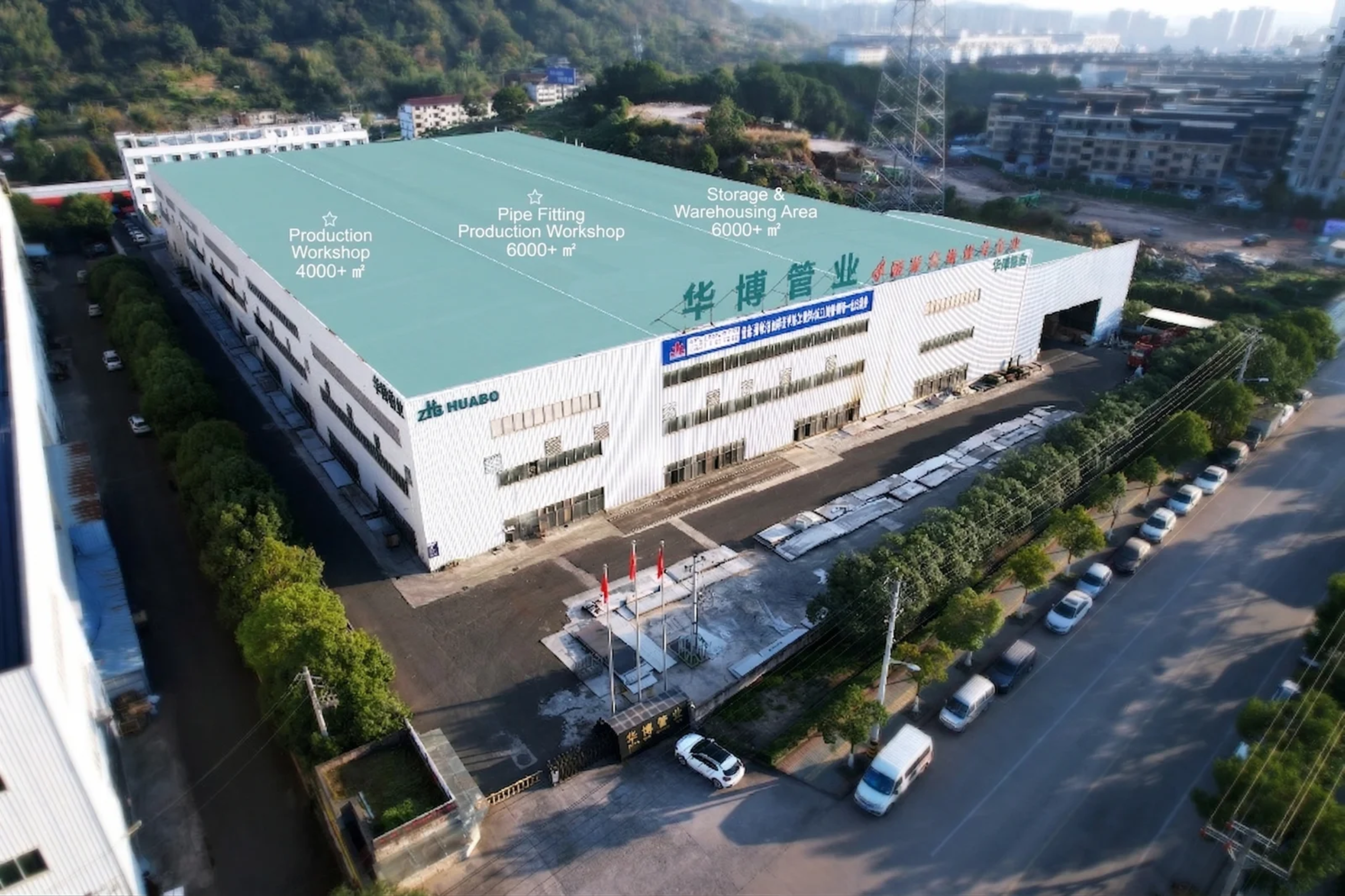
HuaboPipe manufactures stainless butt-weld fittings (cold formed) and forged flanges. Fittings are made to ASME B16.9 (DN15 to DN1200); flanges to ASME B16.5 up to NPS 24 (DN600) and to ASME B16.47 or drawing above that. Larger sizes are made to drawing, up to DN3000. Wall thickness follows the order. Stainless pipe and valves can be supplied to match the project. EN 10204 3.1 certificates are available, and 3.2 is available on request.
Send us the approved line specification and item list, and our quotation will answer it item by item, with any deviations and inspection deliverables clearly listed. Browse our pipe fittings and flanges, or contact us at +86 15210578298 (Tel/WhatsApp) or lucas@hbpipe.com. We typically reply within one business day.

1 Comment