
We see concentric vs eccentric reducer decisions become costly when purchase orders describe only the pipe sizes and material. Missing geometry, wall thickness, or inspection requirements can create fit-up problems and approval delays. A structured buying checklist helps compare both designs and turn engineering requirements into clear supplier specifications.
Concentric and eccentric reducers are distinguished by their centerline geometry: a concentric reducer keeps both pipe ends on one axis, while an eccentric reducer offsets them. Base procurement on the approved piping arrangement, material specification, end dimensions, and inspection requirements, not on appearance or price alone.
This guide splits the selection into four questions: geometry, application requirements, dimensions, and material.
Concentric vs eccentric reducer: What is the difference between a concentric and an eccentric reducer?
Start with geometry, because both products connect pipes of different diameters and can look similar in a quotation.
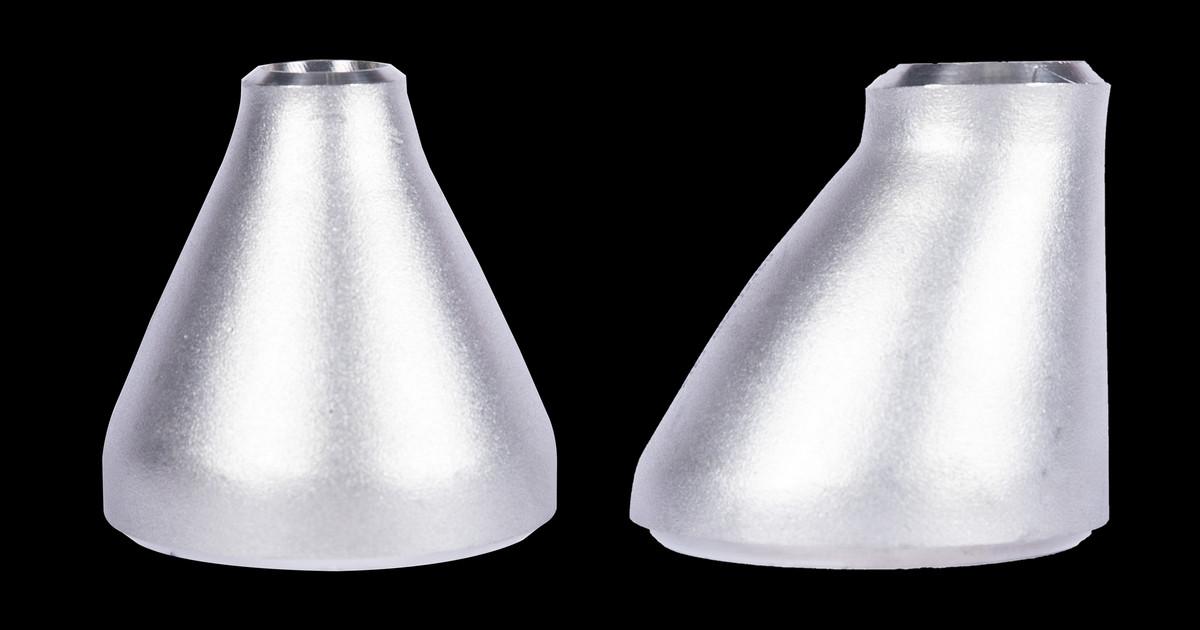
A concentric reducer is a symmetrical transition with aligned inlet and outlet centerlines. An eccentric reducer has offset centerlines and one straight side in its longitudinal profile. Verify that geometry against the drawing, because it affects pipe alignment, available clearance, and the intended installation orientation.
How to compare the two geometries
We use this table during quotation review.
| Comparison point | Concentric reducer | Eccentric reducer |
|---|---|---|
| Centerline relationship | Inlet and outlet share one axis | Centerlines are offset by half the difference between the two end outside diameters |
| Longitudinal profile | Symmetric cone | One straight side, one sloped side |
| Drawing requirement | Confirm axial alignment | Confirm offset and orientation |
| Typical purchasing risk | Wrong end dimensions | Wrong geometry or orientation details |
| Typical location | Vertical lines and other aligned runs | Horizontal lines where one pipe surface stays level |
For example, an NPS 4 × 2 eccentric reducer joins a 114.3 mm OD to a 60.3 mm OD, so the offset is 27 mm. Neither shape is inherently stronger or more suitable for pressure service. That depends on material, wall thickness, design rules, and operating conditions.
What to put in the purchase description
Give every supplier the same five items, so quotations can be compared line by line:
- Concentric or eccentric.
- Large end and small end sizes.
- Wall thickness (schedule) at each end.
- Material grade.
- Standard, such as ASME B16.9 or the project drawing.
Add the approved drawing revision and the inspection documents you need, such as an MTR to EN 10204 3.1. If a supplier proposes a custom transition instead of a standard fitting, do not accept the dimensional deviation without written engineering approval.
Concentric vs eccentric reducer: When should you use an eccentric reducer instead of a concentric reducer?
Be cautious when a supplier recommends an eccentric reducer simply because a line is horizontal. That shortcut can overlook equipment connections, drainage requirements, and the process phase.
Consider an eccentric reducer when the approved design requires one pipe surface to remain level or needs geometry that helps avoid unwanted pockets. Eccentric reducers are used on horizontal lines; vertical lines usually use concentric reducers. Orientation is set at installation and follows the approved drawings.
Why we avoid universal orientation rules
Eccentric reducers are used on horizontal lines. On horizontal pump suction lines, eccentric reducers are normally installed flat-on-top (FOT/TOF) to prevent air pockets at the top of the pipe. Always follow the approved drawings, as some designs call for flat-on-bottom (FOB/BOF). On pipe racks and drain lines they are usually installed FOB/BOF to keep a constant bottom-of-pipe elevation for supports and to allow full drainage. The same eccentric reducer can be installed either way, so orientation is set at installation; if you order prefabricated spools, please state the required orientation.
How to review application-dependent purchases
Use three document checks before you release an order:
- Check the piping drawing. Confirm the reducer type, both end sizes, and the flow direction against the current isometric revision.
- Check the line specification. Confirm the material grade and the wall thickness at each end against the piping class.
- Check the quotation exceptions. Identify any proposed changes to geometry, length, thickness, or manufacturing route.
Concentric reducers are generally used where the design calls for an aligned centerline, such as vertical piping. If the documents disagree, raise a technical query rather than choose the cheaper fitting.
Concentric vs eccentric reducer: What are the ASME B16.9 concentric reducer dimensions?
ASME B16.9 sets the outside diameter at each bevel, the end-to-end length H, and the dimensional tolerances for concentric and eccentric reducers. H depends only on the large end size, and a concentric and an eccentric reducer of the same size have the same H. ASME B16.9 is not a standalone pressure-class table. A fitting is rated as straight seamless pipe of the same material and wall thickness.
Which dimensions to verify
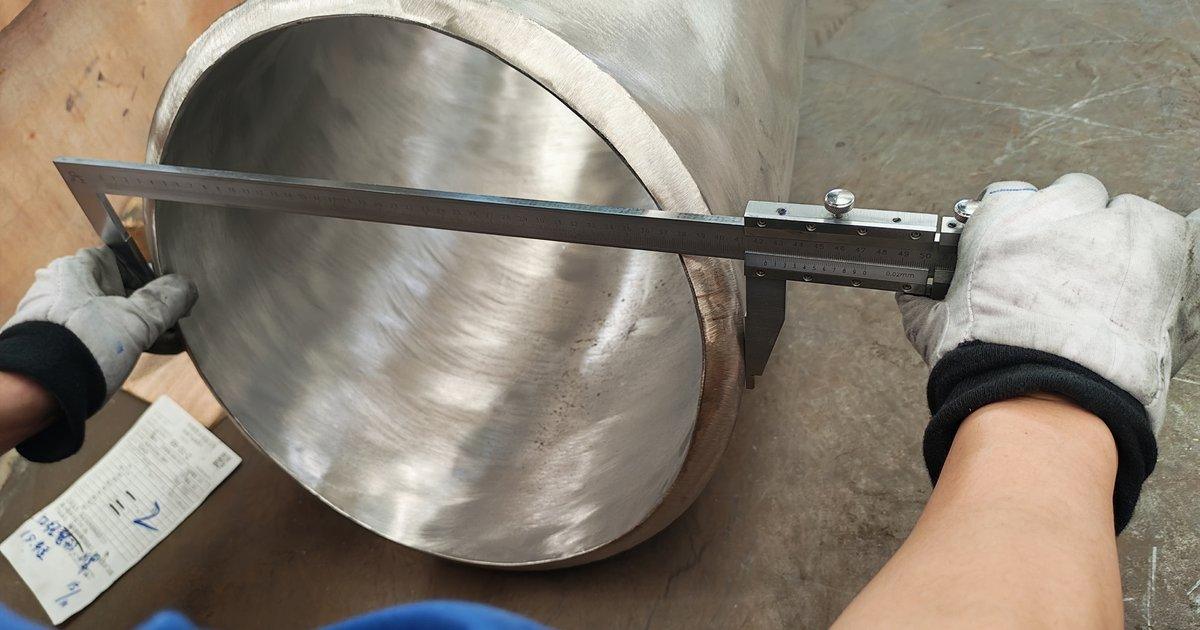
Check these items on the drawing, the quotation, and the dimensional report:
| Dimension | What to check | Why it matters |
|---|---|---|
| Large end and small end OD | OD at each bevel matches the connecting pipe | Fit-up at both welds |
| Body length | The applicable end-to-end dimension H | The fitting must match the layout |
| Wall thickness at each end | Matches the schedule of each connecting pipe | Weld preparation and pressure design |
| End preparation | Bevel to ASME B16.25 unless the drawing states otherwise | Welding procedure |
| Offset (eccentric only) | Half the OD difference, flat side straight | Level pipe surface |
| Tolerances | ASME B16.9 tolerance table | Acceptance at inspection |
H is set by the large end only, so a 6 × 4 and a 6 × 2 reducer have the same length. Common sizes from the ASME B16.9 reducer table:
| Size (NPS) | Large end OD (mm) | Small end OD (mm) | H (mm) |
|---|---|---|---|
| 2 × 1 | 60.3 | 33.4 | 76 |
| 4 × 2 | 114.3 | 60.3 | 102 |
| 6 × 4 | 168.3 | 114.3 | 140 |
| 8 × 6 | 219.1 | 168.3 | 152 |
| 12 × 8 | 323.8 | 219.1 | 203 |
| 14 × 10 | 355.6 | 273.0 | 330 |
Wall thickness is not set by the reducer table. Each end follows the schedule of the pipe it joins, and the two ends can have different schedules. Also check the pipe dimensional standard, such as ASME B36.19 where applicable, separately from the fitting material standard. The 2022 edition dropped the M from B36.19M, so drawings may show either name. See our ASME B31.3 vs ASME B36.19 guide.
Why we recommend a drawing rather than a catalog
A catalog lists standard sizes. It does not show the piping class, the schedule at each end, or the spool orientation. Send the approved drawing or isometric with the inquiry, and we quote against it.
The drawing matters most for combinations outside the standard table, such as a large reduction in one fitting or different schedules at each end. In those cases the drawing defines the fitting, and the dimensions are agreed in writing before production.
Which stainless steel reducer grade should you choose?
Choose the grade from the project material specification. Austenitic stainless steel reducers are ordered to ASTM A403, and duplex reducers to ASTM A815. The reducer is normally the same grade as the connecting pipe.
Do not choose a stainless steel reducer grade from price or a broad "corrosion-resistant" label. Start with the approved material requirements and then compare supplier evidence.
How to compare common material options
The fitting designation on the purchase order should match the grade in the line specification:
| Grade | Fitting designation | What to confirm |
|---|---|---|
| 304/304L | ASTM A403 WP304/304L | Whether the specification asks for dual grade or the L grade only |
| 316/316L | ASTM A403 WP316/316L | Whether the specification asks for dual grade or the L grade only |
| 310S | ASTM A403 WP310S | Service temperature stated in the line class |
| 321 | ASTM A403 WP321 | Service temperature stated in the line class |
| 2205 | ASTM A815 WPS31803 or WPS32205 | Which UNS number the specification calls for |
| 2507 | ASTM A815 WPS32750 | Any extra corrosion or ferrite testing required |
How to assess supplier quality evidence
Confirm the required grade, class where applicable, edition, and supplementary requirements of ASTM A403 or A815. Review heat-number traceability, the mill test report (MTR), dimensional reports, and the inspection and test plan. Request positive material identification (PMI) or additional testing when the purchase specification requires it. PMI is not a replacement for mechanical, processing, or corrosion-related verification.
Frequently Asked Questions
Can I replace an eccentric reducer with a concentric reducer?
Not solely because both end sizes match. The change affects centerline geometry and may affect the intended installation arrangement. Get written approval from the responsible piping engineer before changing the fitting type.
Does ASME B16.9 compliance confirm the material grade?
No. Dimensional and material compliance are separate checks. ASME B16.9 addresses factory-made wrought butt welding fittings, but you still specify the applicable material standard and grade, and verify the MTR and traceability against the purchase order.
Should both ends of a reducer have the same schedule?
Not necessarily. The end requirements need to match the approved piping specification, and identical schedule designations do not always mean identical thicknesses across sizes. Define the requirements for both connections clearly.
What should I send HuaboPipe for a reducer quotation?
Send concentric or eccentric, the large end and small end sizes, the wall thickness (schedule), the material grade, the standard, and the quantity.
Conclusion
Treat concentric vs eccentric reducer selection as a coordinated review of geometry, dimensions, material, and supplier documentation. Confirm engineering requirements first, then compare quotations against the same acceptance criteria. For a project quotation, send the approved drawings, material requirements, quantities, and inspection needs to lucas@hbpipe.com and request a documented offer for technical review.
About HuaboPipe
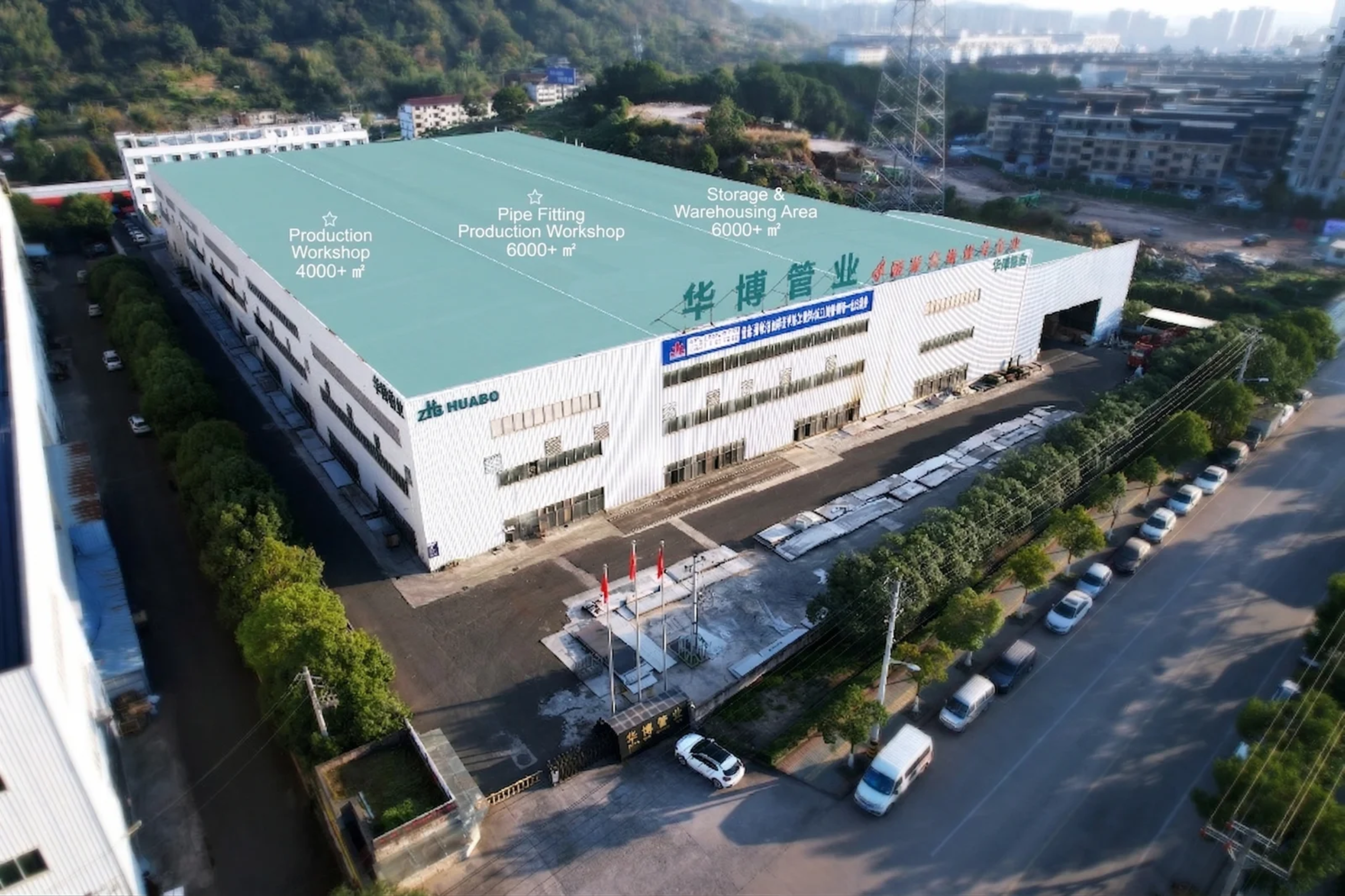
HuaboPipe is a manufacturer of stainless steel fittings and forged flanges, also supplying stainless steel pipe. We were founded in 2004; the company is in Wenzhou and the factory is in Lishui, Zhejiang. Our cold formed concentric and eccentric reducers are made to EN 10253, DIN, JIS or customer drawings, in standard sizes DN15 to DN1200 (larger to drawing, up to DN3000) and Sch10s to XXS. Stock grades are 304/304L, 316/316L, 310S, 321, 2205 and 2507. MTR and PMI inspection are available on request.
See our butt weld fittings range, or the concentric reducer and eccentric reducer product pages. Email lucas@hbpipe.com or WhatsApp +86 152 1057 8298. Send us the material, standard, size and quantity, and our sales team will get back to you with a quote.




1 Comment