Cryogenic piping materials for LNG should be chosen from the minimum design temperature first, not from a grade name that looks right on a quotation. A fitting can look fine at room temperature and still lack the toughness needed during cooldown. This guide compares austenitic stainless steel with low-temperature carbon steel through service temperature, documented properties and inspection.
In short: for piping exposed to LNG near −162 °C, the usual choice is an approved austenitic stainless grade such as 304L or 316L, not ASTM A333 Grade 6 carbon steel. A333 Grade 6 is commonly impact-tested to about −45 °C, which suits warmer low-temperature lines, not LNG service itself. Final selection follows the piping code, the project specification and a qualified engineering review of fittings, flanges, welds and inspection.
Material selection and supplier approval are separate steps. A suitable alloy does not make every finished fitting acceptable, and a complete certificate package does not correct an unsuitable grade.
How cold is LNG, and what that does to steel
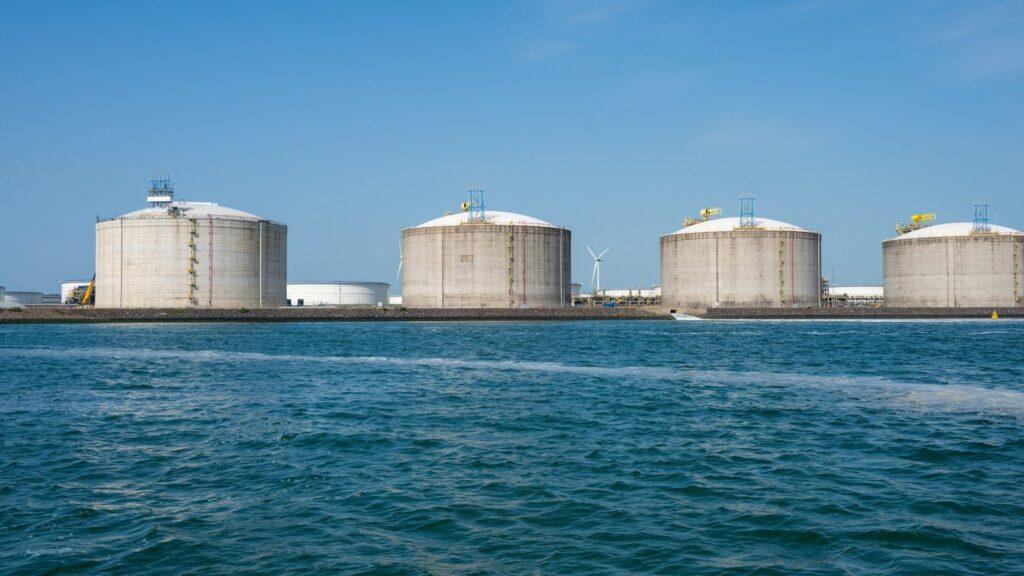
Start with the minimum design temperature, not only the normal operating temperature. LNG is commonly linked to about −162 °C at atmospheric pressure, but that single figure does not describe every line. Liquid transfer piping, vapour systems, utility lines and warmer process sections can have different qualification needs.
Do not assume a line stays warm because its name includes “vent” or “vapour”. Liquid carryover, depressurisation, cooldown and other credible transients can still take that line colder. For procurement, ask for three inputs:
- Normal operating temperature
- Approved minimum design temperature
- Design pressure and piping class
Any missing input is a clarification item, not a licence for the supplier to assume a convenient temperature.
Thermal contraction belongs in the purchasing discussion. Austenitic stainless contracts significantly between ambient and LNG temperature. About 3 mm per metre is a useful order-of-magnitude figure, not a design value: that is roughly 90 mm of free contraction over 30 metres. Actual movement depends on material, temperature interval, geometry, restraint and operating sequence. Ask whether flexibility, supports, equipment interfaces and thermal cycling are already covered in the engineering package. A fitting quotation cannot replace a piping flexibility assessment.
Ductile-to-brittle transition: why carbon steel needs limits
“Low-temperature steel” is a broad label, not a universal capability. Ferritic carbon steels can show a ductile-to-brittle transition: they keep strength while losing the ability to deform locally before fracture. Austenitic stainless steels generally have no ductile-to-brittle transition of that kind and keep good toughness at cryogenic temperatures.
Room-temperature tensile strength is not evidence of LNG suitability. Strength and toughness answer different questions. The transition is also not one universal temperature: composition, processing, thickness, heat treatment, weld condition and acceptance criteria all matter. The purchasing decision follows documented qualification, not a simplified temperature slogan.
A conversational warning such as “use stainless below −100 °C” is not a procurement rule. Some nickel-alloyed steels serve demanding cryogenic applications under their own specifications; treat any “equivalent cryogenic steel” proposal as a separate engineering review, with the exact material designation and documents named.
Even for austenitic stainless, the assembled pressure boundary still needs review: base-material identification and condition; weld procedure and filler metal; any required weld-metal or heat-affected-zone toughness evidence; and traceability after forming, machining and marking.
Low-temperature carbon steel (ASTM A333) vs austenitic stainless
Quotations sometimes list “ASTM A333” without a grade. That omission matters: ASTM A333 covers several grades, including alloyed ones. Comparing an unspecified A333 product with 304L or 316L produces a misleading technical and commercial comparison.
Treat ASTM A333 Grade 6 as distinct from the whole A333 family. Its commonly specified impact-test temperature is −50 °F, about −45 °C. That does not establish suitability for LNG at −162 °C. Grade 6 can be fine for upstream or vent lines in that warmer range; it is not a default material for direct LNG-temperature exposure.
| Purchasing question | ASTM A333 Grade 6 | Austenitic stainless (304L / 316L) |
|---|---|---|
| Material family | Carbon steel pipe for specified low-temperature service | Stainless grades ordered under the applicable product specification |
| Familiar temperature reference | About −45 °C impact-test temperature | Cryogenic toughness reviewed under the code and product condition |
| Does the designation alone prove LNG suitability? | No | No — grade, product form, fabrication and documents still need approval |
| Does a pipe specification cover fittings and flanges? | No | No |
| What the quotation should name | Exact grade, product standard, testing basis, approved service limits | Exact grade, product standard, manufacturing condition, inspection |
An impact-test temperature is not automatically the universal minimum design temperature for every component and loading case. Code rules, thickness, stress conditions and project requirements still apply. None of that justifies treating Grade 6 as a substitute for an approved LNG-temperature material.
Keep pipe, fitting and flange specifications separate. Typical stainless references include ASTM A312 for pipe where applicable, ASTM A403 for wrought austenitic fittings, and ASTM A182 for forged flanges and related forged components. The purchase description must also name the grade, dimensions, construction and dimensional standard. A333 grades beyond Grade 6, including nickel-alloyed grades, need their own independent review.
Common stainless grades for LNG lines: 304L, 316L
Do not treat 316L as an automatic upgrade for every LNG line. Both grades are widely used austenitics with good cryogenic toughness. Choose between them on the project’s corrosion basis, piping class, availability and fabrication controls — not on temperature alone — and require the low-carbon L grade plus the specified heat-treatment condition (typically solution annealed).
The molybdenum in 316L generally improves resistance to some forms of localised corrosion compared with 304L. That is not immunity to chloride damage, and it does not prove 316L is needed everywhere. Ask about external environment, insulation, cleaning and possible contaminants; marine exposure and moisture under insulation may matter even when the process stream looks clean.
| Evaluation point | Purchasing approach |
|---|---|
| Cryogenic toughness | Rely on approved material and fabrication condition, not the grade name alone |
| Corrosion environment | Get the project’s corrosion basis before accepting a grade substitution |
| Low-carbon “L” designation | Confirm the purchase order and certificates identify the required L grade |
| Heat treatment | Check the product specification and required solution-annealed condition |
| Availability | Compare compliant options rather than accepting an unapproved substitution for shorter delivery |
Handheld XRF can help separate many alloy compositions, including the molybdenum difference between 304-type and 316-type materials. Conventional handheld XRF does not verify the low carbon content of an L grade. Review traceable chemical analysis and any project-required verification method. For a fuller 304 vs 316L comparison on fittings, see 304 and 316L fittings: how to choose.
For cold-formed fittings, the supplier should identify the final manufacturing and heat-treatment condition required by the governing product standard. Cryogenic piping materials should arrive with evidence of compliance, not only a familiar grade stamp.
Impact testing and other inspection for cryogenic fittings and flanges
Define inspection before the order. A promise of “full testing” does not name specimen locations, acceptance criteria, witnessing or the documents needed to release a cryogenic package.
Where the project is governed by ASME B31.3 Process Piping, the responsible engineer should identify the applicable low-temperature and impact-testing provisions for the adopted edition. Table 323.2.2 and its associated rules deserve careful review, including any lateral-expansion criterion, but a table reference is not a blanket testing instruction. Applicability depends on edition, material, product form, temperature and other stated conditions. Ask specifically whether impact testing of weld metal or other weld-related regions is required.
| Inspection item | Evidence to request |
|---|---|
| Material identity | Traceable certificates matching heat identification |
| Chemical and mechanical properties | Results required by the material specification and purchase order |
| Heat treatment | Specified condition and supporting records where required |
| Impact testing | Temperature, specimen details, applicable results and acceptance criteria |
| Dimensions | Agreed dimensions and tolerances |
| Nondestructive examination | Method, coverage, acceptance standard and personnel qualification |
Do not assume PT, UT, RT and pressure testing are all mandatory for every fitting or flange. Match the examination to the component, manufacturing route and project specification. For how penetrant testing is typically scoped on fittings work, see penetrant testing for project inspection.
EN 10204 3.1 is an inspection certificate with specific results, validated by the manufacturer’s authorised inspection representative independent of manufacturing. EN 10204 3.2 adds validation by the purchaser’s authorised representative or an inspector designated under applicable regulations. Arrange 3.2 before production when it is required. Neither certificate type by itself proves that the materials suit the intended LNG application. Company and quality certificates are listed on our certificates page.
What to send for an LNG fittings quote
An RFQ that leaves temperature, manufacturing or documents undefined invites low quotations that omit necessary work. Those gaps return as deviations, extras or delays.
| RFQ field | Information to include |
|---|---|
| Service and temperature | Service, normal operating temperature, approved minimum design temperature |
| Design basis | Design pressure, piping code and edition, piping class |
| Component description | Fitting or flange type and dimensional standard |
| Material | Product standard, exact grade, manufacturing condition |
| Dimensions | Size, wall thickness or schedule, flange rating, facing, connection details |
| Toughness | Test temperature, acceptance basis, base-metal or weld requirements |
| Inspection | Inspection and test plan, examination scope, witnessing |
| Documentation | EN 10204 3.1 or 3.2 and any extra traceability records |
| Commercial scope | Quantities, delivery, packing, quotation validity |
Ask each supplier for a compliance statement and a separate exception list. Silence is not acceptance. Compare technical acceptability first, then commercial value. Request a document schedule so critical records can be reviewed before shipment. For a general purchasing checklist, see our buying guide. Browse available pipe fittings, and larger diameters under large-diameter stainless fittings.
FAQ
Can ASTM A333 Grade 6 be used for piping exposed to LNG at −162 °C?
Not as a default. Its commonly specified impact-test temperature is about −45 °C, far warmer than LNG. The responsible engineer must approve the exact material against the minimum design temperature and the applicable code.
Is 316L always better than 304L for LNG piping?
No. Both can provide good cryogenic toughness in the right product and fabrication condition. Choose through the approved corrosion assessment, piping class and procurement requirements, not by assuming higher alloy content improves every aspect of suitability.
Does austenitic stainless steel always need impact testing?
Neither universal testing nor universal exemption. Requirements depend on the code edition, material, product form, manufacturing condition, temperature and project specification. Check weld-related requirements separately: a base-material exemption does not automatically clear the completed assembly.
Is EN 10204 3.2 necessary for every LNG fitting order?
Specify 3.2 when the project or purchaser requires its validation arrangements. LNG service alone does not make it automatic. Agree the inspection scope before manufacture.
How much does stainless steel contract during LNG cooldown?
About 3 mm per metre is a preliminary illustration from ambient to LNG temperature. Do not use it for final stress or support design. A qualified piping engineer should calculate movement from material data, temperature limits, restraint and geometry.
Sourcing stainless fittings and flanges for LNG lines
Cryogenic piping materials for LNG are settled through minimum design temperature, exact product specifications, fabrication condition and verifiable inspection records. A333 Grade 6 is not interchangeable with approved austenitic stainless for direct LNG exposure.
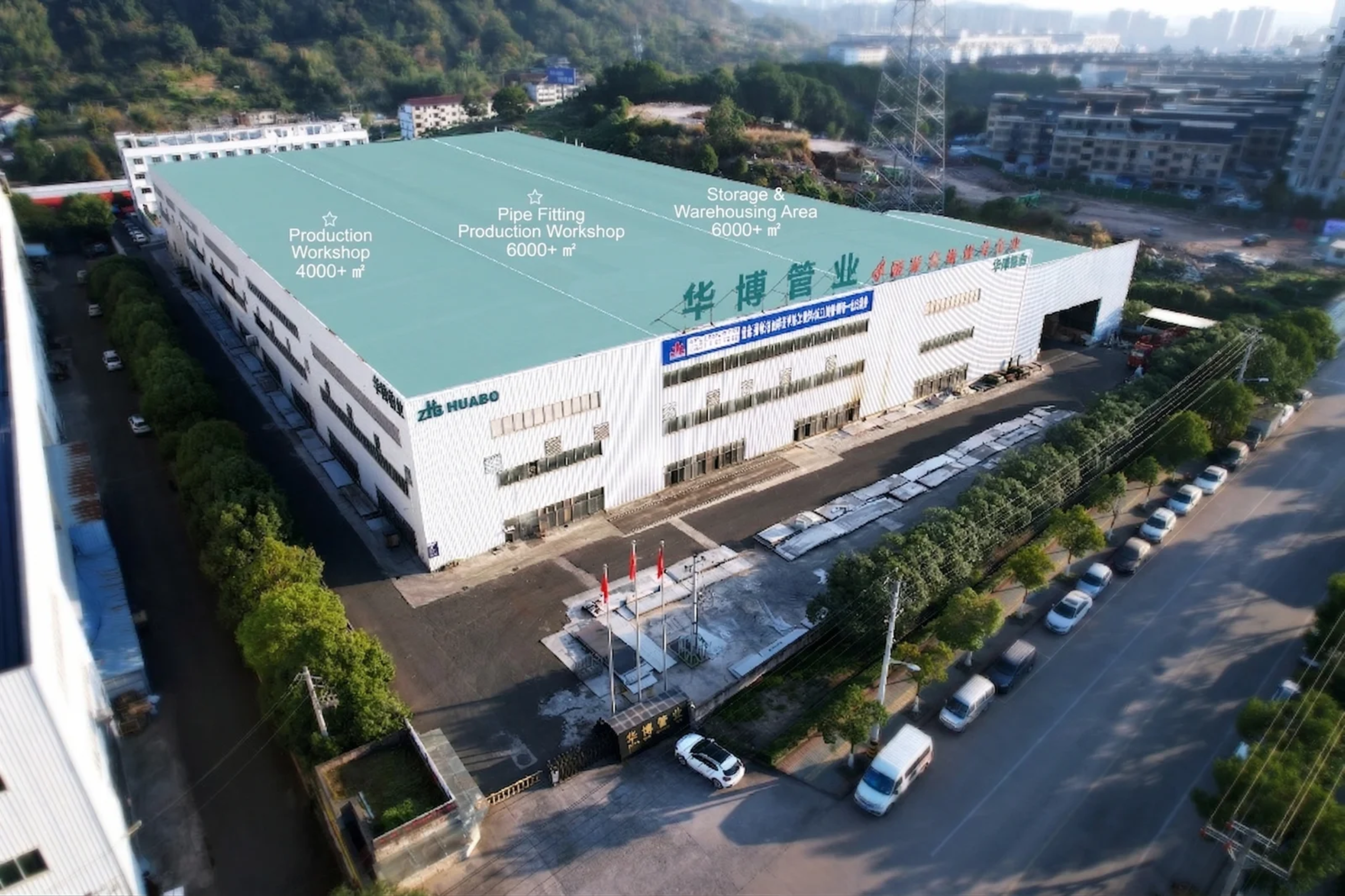
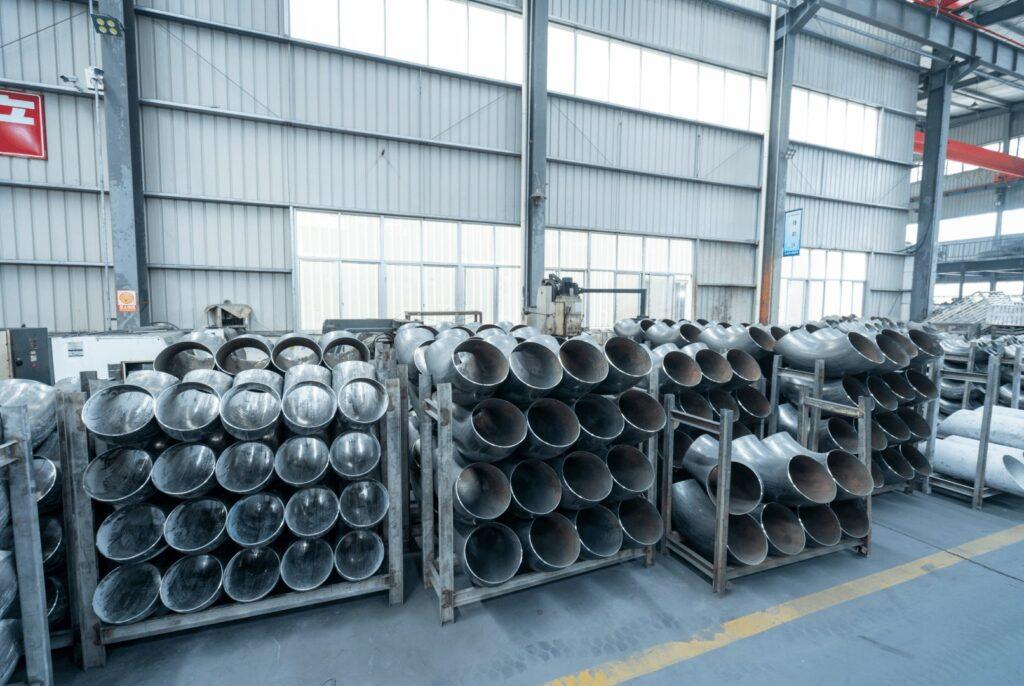
HuaboPipe manufactures 304L/316L stainless butt-weld fittings (cold formed) and forged flanges for these lines. Fittings are made to ASME B16.9 (DN15 to DN1200); flanges to ASME B16.5 up to NPS 24 (DN600) and to ASME B16.47 or drawing above that. Larger sizes are made to drawing, up to DN3000. Wall thickness follows the order. Stainless pipe and valves can be supplied to match the project. This article does not claim supply of A333 pipe. EN 10204 3.1 certificates are available, and 3.2 is available on request.
Send us the approved minimum design temperature, material specification, dimensions, quantities and inspection-document schedule, and our quotation will address them item by item. Browse our pipe fittings and flanges, or contact us at +86 15210578298 (Tel/WhatsApp) or lucas@hbpipe.com. We typically reply within one business day.