High purity piping is often discussed as if every stainless steel line in a semiconductor fab needs the same finish. It does not. Applying one standard to everything either inflates the cost of ordinary utility lines or leaves critical requirements unmet on contamination-sensitive ones. The useful first question is simple: does the line belong to a UHP distribution system or to the facility infrastructure?
In short: UHP lines (specialty gas and high-purity chemical distribution) are usually small 316L precision tube with a very low internal roughness, bought separately to the project's UHP specification. Facility lines (process cooling water, exhaust, utility water and bulk systems) run from about 2 inches to large diameters in 304/316L pipe, butt-weld fittings and flanges, normally pickled and passivated. Ask the designer which system a line belongs to before discussing finish, Ra or documents.
The distinction is about service requirements, not about where the pipe sits inside the fab.
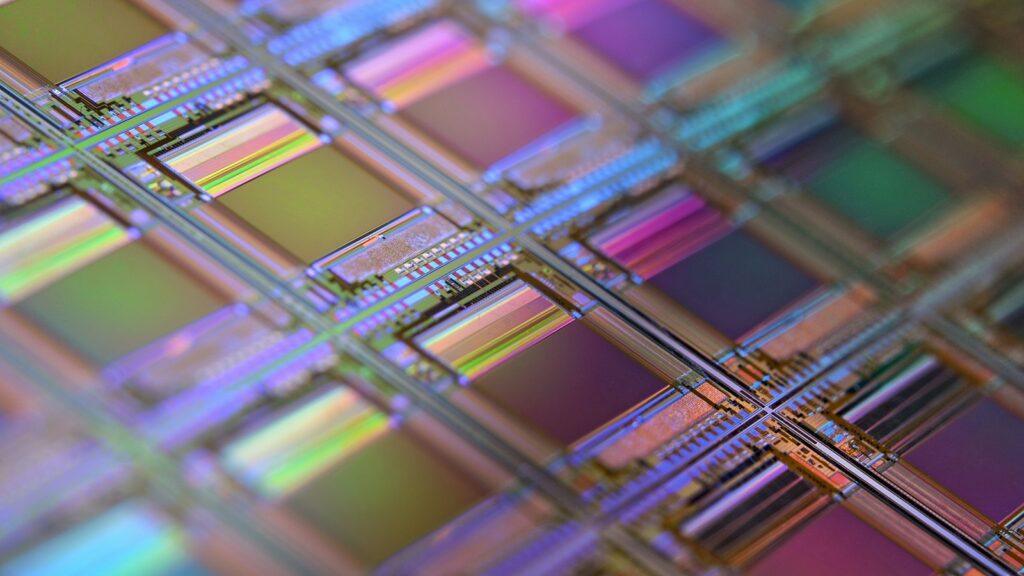
Purity tiers in a fab: UHP gas, high-purity chemical, facility utilities
The label “semiconductor piping” causes trouble when it replaces a clear service description. Two components can share the same stainless grade and still have very different acceptance requirements. Classify the system first, then talk about dimensions, finish and price.
| Consideration | UHP distribution | Facility infrastructure |
|---|---|---|
| Typical services | Specialty gas, high-purity chemical lines | PCW, exhaust, utility water, bulk systems |
| Product form | Precision tube and tube-end components | Pipe, butt-weld fittings, flanges |
| Typical size | Often 1/4" to 2", with exceptions | Often 2" up to large diameters |
| Material | Mostly controlled 316L | Often 304/304L or 316/316L |
| Surface | Electropolished, specified internal Ra and cleanliness | Pickled and passivated, clean bore |
| Supplier check | Proven UHP manufacture and contamination control | Proven piping manufacture, inspection, traceability |
Treat the size ranges as illustrations. A small line is not automatically UHP, and a large line is not automatically a utility. Also keep tube outside diameter apart from nominal pipe size: similar numbers on two drawings do not mean the parts fit each other.
Not every high-purity chemical line is stainless steel service; some media need other materials. Equally, not every exhaust system suits ordinary stainless facility components. The designer has to evaluate the actual medium, operating conditions and corrosion risk.
Standards need the same care. An industry label is not a complete purchasing specification; the buyer should name the exact document, edition and clauses that apply.
The first clarification is therefore: which service, which piping class, which product form, and which acceptance requirements? A broad industry label should not turn into an expensive technical assumption.
Electropolished vs pickled/passivated stainless: what changes
When schedules are tight, finish names become shortcuts. “Electropolished” sounds like an automatic upgrade and “pickled” sounds second-rate. Neither ranking holds. A finish adds value only when the approved service needs it.
Electropolishing, pickling and passivation are related but different processes:
- Electropolishing removes and smooths surface material electrochemically, lowering roughness and leaving a clean, chromium-rich surface.
- Pickling removes scale and the affected surface layer, for example after welding or heat treatment.
- Passivation is a specified treatment that removes free iron and supports the natural corrosion resistance of stainless steel.
- Cleanliness is a separate requirement covering residues, handling and preservation.
None of these is a universal guarantee. A part with the right finish can still arrive contaminated or poorly protected.
For UHP gas lines, electropolished 316L tube is the norm because the wetted surface affects particle and moisture behaviour. For a PCW or utility line, electropolishing usually adds cost without adding value; a correct pickled-and-passivated finish is what the specification normally calls for. Passivation alone, in turn, does not make a component UHP-suitable.
For facility purchases, read references to ASTM A380/A380M and ASTM A967/A967M carefully. A380 is a practice covering cleaning, descaling, pickling and passivation; A967 specifies chemical passivation treatments and tests. A quotation that says only “ASTM passivated” leaves too much open: ask which treatment, which test and what record will be supplied.
Grade choice sits underneath all of this. Whether a facility line runs in 304L or 316L depends on the medium and the corrosion basis, not on the fab label; see 304 vs 316L fittings: how to choose.
Surface roughness (Ra): reading the numbers
Surface roughness Ra is the arithmetic average roughness of a measured profile. It is one acceptance parameter, not a full description of surface quality. Ra alone does not establish cleanliness, corrosion performance or freedom from isolated defects.
UHP specifications often call for an internal Ra of 0.25 µm or lower. That is a common value, not a universal semiconductor threshold. This Ra surface finish chart only converts units:
| Ra (µm) | Ra (µin, approx.) | What to check |
|---|---|---|
| 0.25 | 9.8 | Does the project actually specify this limit? |
| 0.40 | 15.7 | Permitted measurement method and location |
| 0.80 | 31.5 | Suitability cannot be inferred from the number alone |
| 1.60 | 63.0 | Compare with the actual acceptance criteria |
Check whether the stated value is a maximum or an average, where it is measured, in which direction, with what instrument settings, and whether the internal surface is even reachable for measurement. All of these affect how a result is read.
A practical example: a 12-inch PCW header carrying an unexplained UHP roughness requirement. The right move is to ask the designer what the requirement is for, not to delete it on the buyer’s own authority. The aim is to remove unnecessary cost without weakening an approved specification.
Joining methods: butt-weld fittings and flanges on facility lines
UHP and facility systems are also joined differently, and that drives what the fittings look like.
UHP lines use tube-end components made to the dimensions and surface requirements of the UHP specification, joined as that specification requires. They are not standard butt-weld fittings, and an ordinary elbow is not a substitute for them, even when both are 316L.
On facility lines, pipe is joined with butt-weld fittings and flanges under the project’s qualified welding procedures. The weld ends, wall thickness and dimensional standard (for example ASME B16.9 for fittings and ASME B16.5 for flanges) matter more here than internal Ra.
The common mistakes run in both directions: UHP specifications applied to a large PCW header, or ordinary pickled fittings dropped into a gas line. Neither should happen without formal engineering approval.
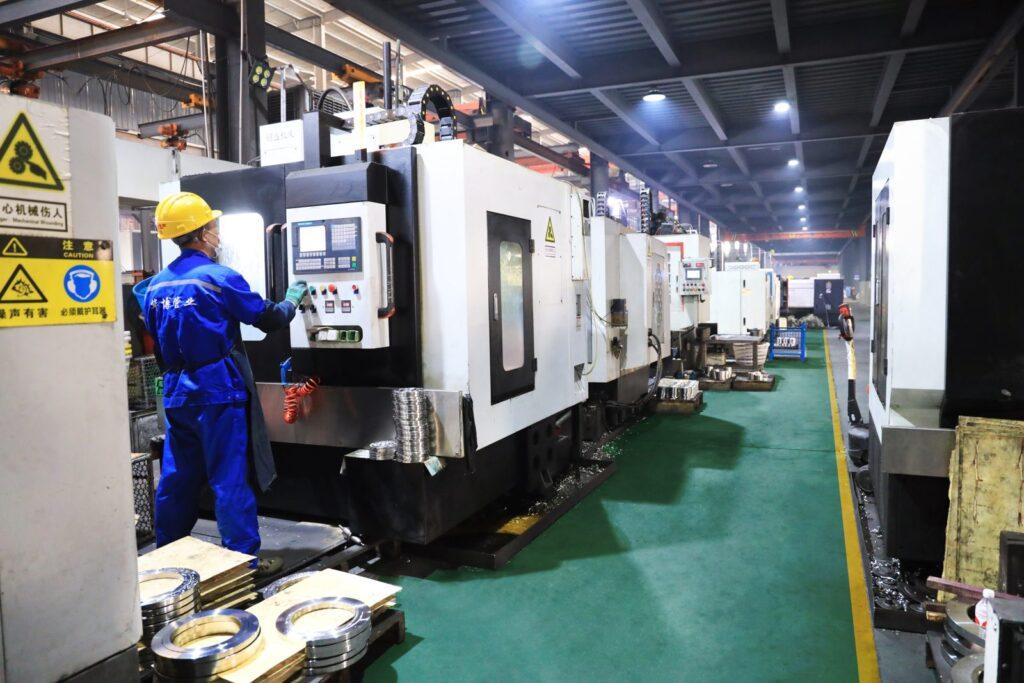
Facility lines (PCW, exhaust, bulk) and large-diameter fittings
Most of the stainless tonnage in a fab sits on the facility side: process cooling water mains and headers, exhaust ducting and piping, utility water and bulk systems. These lines start around 2 inches and go up to large diameters.
For these packages, what usually matters is correct dimensions, sound manufacture, verified material, an appropriate surface treatment and reliable documents. A clean bore, correct passivation, capped ends, PMI and 3.1 certificates are typically what the inspector checks. Electropolishing is specified only where the designer asks for it.
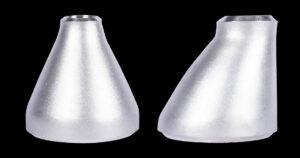
Typical facility items are elbows, tees, reducers and caps in 304/304L or 316/316L, plus weld neck and other flanges. Fitting types and sizes are listed under pipe fittings; larger mains are covered in large-diameter stainless fittings.
When comparing quotations, put them on a common technical basis. A low unit price may leave out testing, material records, end protection or inspection attendance. An unsupported demand for electropolishing on a utility line, on the other hand, can add cost that buys nothing.
Documents and cleanliness checks to request
A neat quotation can hide an incomplete inspection package. A material certificate does not prove cleanliness, and a treatment record does not prove dimensions. Link each important requirement to a specific record before the order is placed.
| Requirement | Evidence to request | What to check |
|---|---|---|
| Material | Specified inspection certificate with heat identification | Records match the supplied items |
| Alloy verification | Agreed PMI records | Method can verify the elements that matter |
| Dimensions | Inspection report against the approved standard | Sampling scope and acceptance criteria |
| Surface treatment | Treatment record and verification results | Not just a generic process statement |
| Surface roughness | Measurement report, where required | Method, locations, acceptance limit |
| Delivery condition | Packaging and end-protection requirements | Protection intact on arrival |
EN 10204 type 3.1 is not automatically a third-party certificate. It carries specific inspection results validated by the manufacturer’s authorised inspection representative, independent of the manufacturing department. Type 3.2 adds validation by the purchaser’s representative or a designated inspector and should be arranged before production.
Do not overstate PMI. A handheld XRF reading can separate common stainless families, but it cannot confirm the low carbon content that makes 316L a low-carbon grade.
Keep component records apart from installation records. The fitting supplier, the fabricator and the installing contractor carry different responsibilities; assign them in the purchase package so that missing records do not turn into a dispute at handover. Ask for the full document package early enough to review it before dispatch.
Company and quality certificates are listed on the certificates page, and a general purchasing checklist is in the buying guide.
FAQ
Does every semiconductor piping system need electropolished stainless steel?
No. Contamination-sensitive UHP distribution and facility services such as PCW and utility water have different requirements. Follow the approved specification for each system. Electropolishing can be essential on one package and an unnecessary expense on another.
Can standard butt-weld fittings replace ultra high purity fittings?
Not without formal engineering approval. UHP fittings and standard butt-weld fittings differ in dimensions, end connections, internal surface, cleanliness and documentation. A shared grade such as 316L does not make them interchangeable.
Does a low Ra value prove a component is UHP-ready?
No. Ra is one piece of evidence. Material, surface condition, cleanliness, connection design, inspection records and packaging all count, and the project specification defines how they establish acceptance.
Can a facility butt-weld fitting be electropolished?
Yes. Electropolishing is available as a matching service when the designer asks for it, with the Ra requirement confirmed on the drawing. It is still a facility butt-weld fitting, not a UHP component, and should not go into a UHP line.
Sourcing stainless fittings and flanges for semiconductor facility lines
High purity piping decisions start with the service: identify the system, then match product form, surface requirement, inspection evidence and supplier capability. UHP specifications should not be applied automatically to facility headers, and ordinary facility fittings should not be dropped into UHP systems.
HuaboPipe supplies 304/304L and 316/316L stainless butt-weld fittings (cold formed) and forged flanges for the facility side of fab projects: PCW, exhaust and utility lines. Electropolishing is available as a matching service. Fittings are made to ASME B16.9 (DN15 to DN1200); flanges to ASME B16.5 up to NPS 24 (DN600) and to ASME B16.47 or drawing above that. Larger sizes are made to drawing, up to DN3000. Wall thickness follows the order. Stainless pipe and valves can be supplied to match the project. EN 10204 3.1 certificates are available, and 3.2 is available on request.
Send us the service, piping class, material specification, dimensions, surface-treatment requirement, quantities and document schedule, and our quotation will address them item by item. Browse our pipe fittings and flanges, or contact us at +86 15210578298 (Tel/WhatsApp) or lucas@hbpipe.com. We typically reply within one business day.